GPhC-registered pharmacies · London & Nottingham | Free UK delivery: eligible orders £50+; selected items £60+ | Find your branch


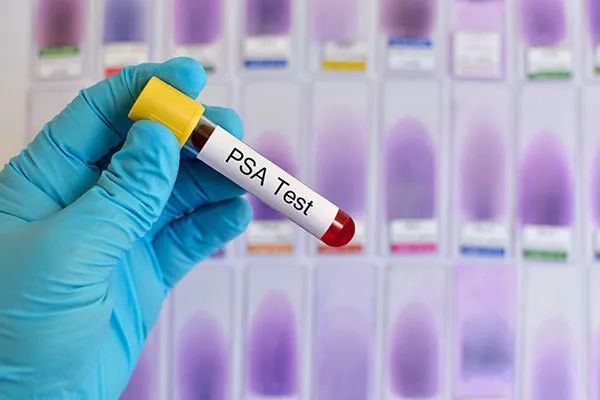


Prostate Profile (3 health indicators)- In Store/Home
£99.00
You are prepaying for the selected blood-testing service. Choose the correct in-store or at-home option. In-store times are confirmed by the pharmacy; home-test options collect a delivery address at checkout. Results provide health information and are not a diagnosis.
- Choose the blood test and collection method
- Pay securely online
- The pharmacy confirms location and time
- Sample collection and laboratory analysis
SKU WY0034370S-1

The Prostate Profile is a 3-marker blood test measuring total PSA, free PSA and the free-to-total PSA ratio to help assess prostate health, processed by London Medical Laboratory (LML), a UKAS-accredited ISO 15189 laboratory, and sold by Ways Pharmacy (UK).
Key facts
| Test type | Prostate-specific antigen (PSA) blood profile |
|---|---|
| No. of biomarkers | 3 — total PSA, free PSA, free:total PSA ratio |
| Before testing | Wait 48 hours after ejaculation, which can raise PSA |
| Sample | Blood — in-store phlebotomy or at-home finger-prick |
| Laboratory | London Medical Laboratory (LML) — UKAS-accredited (ISO 15189) |
| Turnaround | Typically 3–5 working days from when the lab receives your sample |
| Options | In-store at Holborn London, or at-home self-collection kit |
| Sold by | Ways Pharmacy, UK (GPhC-registered) |
Who it is for
- Men over 50 who want regular PSA monitoring to track changes over time
- Men with a family history of prostate cancer considering earlier screening
- Men with urinary symptoms — frequency, night-time urination, dribbling, blood in urine or semen, painful urination — who also plan to see a doctor
- Men already diagnosed with a prostate condition who want to monitor PSA between clinic visits
Not suitable for: use as a definitive diagnosis of prostate cancer (PSA cannot confirm or exclude cancer on its own); acutely unwell people who need urgent assessment; replacement for assessment by a doctor.
What is measured
- Prostate Specific Antigen (total PSA) — the overall amount of PSA in your blood, produced by the prostate gland
- Free Prostate Specific Antigen (free PSA) — the portion of PSA not bound to other proteins
- Free:Total PSA Ratio — the ratio of free to total PSA, which helps put a raised total PSA in context
PSA can be raised by an enlarged prostate, prostate inflammation or recent ejaculation, not only by cancer, and prostate cancer can sometimes be present with a normal PSA. Results are interpreted alongside symptoms and clinical assessment.
How it works
- Complete payment online and choose your option: an appointment at Holborn London, or an at-home self-collection kit posted to you.
- Wait at least 48 hours after ejaculation before your sample, as this can raise PSA and skew the result.
- For in-store, attend Ways Pharmacy, 77 Southampton Row, London WC1B 4ET, where a trained operator takes a blood sample. For at-home, follow the kit instructions to collect a finger-prick sample and return it in the prepaid packaging.
- Your sample is sent to London Medical Laboratory for analysis.
- You receive a written report with each marker against its reference range, typically within 3–5 working days. A pharmacist can talk you through it and recommend GP follow-up where appropriate.
Frequently asked questions
Do I need to do anything before a PSA test?
Yes. Wait at least 48 hours after ejaculation before your sample, because this can temporarily raise PSA. Tell us if you have had a recent urinary infection or prostate procedure, as these can also affect the result.
Can a PSA test diagnose prostate cancer?
No. PSA testing alone cannot confirm or exclude prostate cancer. A raised result needs further investigation, and cancer is sometimes present with a normal PSA. The test is a monitoring and risk-assessment tool, most useful when tracked over time.
How long do results take?
Results are typically returned 3 to 5 working days after London Medical Laboratory receives your sample. You will receive a written report showing each marker against its reference range.
Is the laboratory accredited?
Yes. Samples are processed by London Medical Laboratory (LML), a UKAS-accredited laboratory operating to ISO 15189, the international standard for medical testing laboratories.
What if my PSA is raised?
A raised PSA does not mean you have cancer, but it should be investigated. The pharmacist will explain your result and recommend that you see your GP, who can arrange examination and any further testing. Reference ranges are provided with your report.
When to seek further advice
This test does not diagnose prostate cancer. Reference ranges are provided with your report; discuss your results with a clinician, and follow up any raised or abnormal PSA with your GP. See your GP promptly if you have urinary symptoms or blood in your urine or semen.
This is a private health screening service. Results are interpretive and do not replace clinical diagnosis by a GP or specialist. Abnormal results should be followed up with your GP.
Related products


Pharmacist-led care · English & 中文
Free UK delivery: eligible orders £50+; selected items £60+