GPhC-registered pharmacies · London & Nottingham | Free UK delivery: eligible orders £50+; selected items £60+ | Find your branch


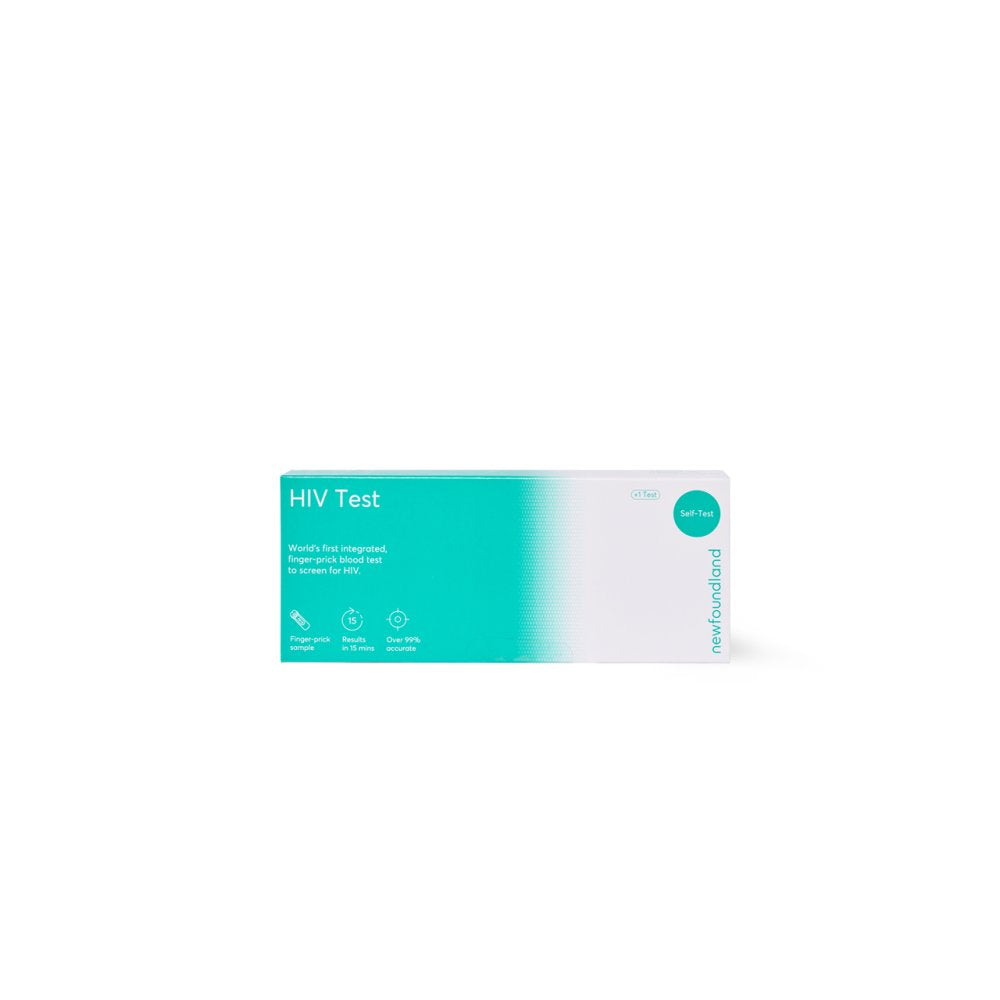


HIV Test self test Kit
SKU WY0034608S

The HIV Self-Test Kit is a CE-marked at-home rapid test that detects antibodies to HIV-1 and HIV-2 from a small finger-prick blood sample (approximately 10 microlitres), sold by Ways Pharmacy (UK) for confidential self-testing.
Key facts
| Test type | Rapid HIV antibody self-test (lateral flow) |
|---|---|
| Detects | Antibodies to HIV-1 and HIV-2 |
| Sample | Capillary whole blood, approximately 10 µL (finger-prick) |
| Result time | Approximately 15 minutes |
| Window period | Around 3 months from possible exposure for the most reliable result |
| CE marking | CE-marked in vitro diagnostic device for self-test use |
| Use setting | At-home self-test, single use |
| Sold by | Ways Pharmacy, UK (GPhC-registered) |
Who it is for
- Adults who have had unprotected sex with a new or untested partner and want a discreet at-home check
- Sexual partners of people who are HIV-positive who want self-testing in between clinic visits
- Men who have sex with men, who are advised by UK guidance to test for HIV regularly
- People who have never been tested for HIV and want a baseline test outside of a clinical setting
- People who cannot easily access an NHS sexual health clinic or GP HIV testing service
Not suitable for: people exposed to HIV within the last 72 hours seeking post-exposure prophylaxis (PEP) — go directly to an NHS sexual health clinic or A&E; people who need a result for legal, occupational or insurance purposes (a clinical laboratory test is required); diagnosing infection in newborns of HIV-positive mothers (requires PCR-based testing).
How to use
- Wash and dry hands. Lay out all kit components on a clean, dry, flat surface. Check the expiry date.
- Warm the chosen fingertip (ring or middle finger of the non-dominant hand) by rubbing it; clean it with the alcohol wipe provided and let it dry.
- Twist off the lancet cap, place the lancet firmly against the side of the fingertip, and press until you hear a click.
- Wipe away the first drop of blood. Squeeze gently to form a second drop, then collect the specified volume using the pipette/loop provided.
- Apply the blood to the sample well of the test cassette, then add the buffer drops as instructed.
- Read the result at the time stated in the kit insert (typically 15 minutes). Do not read after the maximum stated time.
Standard procedure — refer to kit-specific instructions on the day. Reading windows and buffer volumes vary slightly by manufacturer.
Frequently asked questions
How accurate is the HIV self-test?
Modern CE-marked HIV self-tests have high sensitivity and specificity when used correctly and outside the window period. A reactive (positive) self-test result always requires confirmatory laboratory testing through an NHS sexual health clinic. A non-reactive (negative) result taken inside the 3-month window period does not exclude infection.
What is the window period and why does it matter?
The window period is the time between possible exposure to HIV and the point at which antibodies are reliably detectable. For antibody-based self-tests, the most reliable result is obtained from around 3 months after the last possible exposure. Testing earlier can give a false negative result.
What should I do if my result is reactive (positive)?
A reactive self-test result is not a diagnosis on its own. Contact an NHS sexual health clinic, your GP, or call 111 to arrange a confirmatory laboratory test. If confirmed, early treatment with antiretroviral therapy is highly effective and lets people with HIV live full lives. Avoid unprotected sex until you have confirmatory results and have spoken to a clinician.
What if my result is non-reactive (negative)?
A non-reactive result outside the window period suggests you are unlikely to have HIV from any exposure that occurred more than 3 months before testing. If the possible exposure was within the last 3 months, repeat the test 3 months after the most recent risk event.
Is the test confidential? Will anyone be informed?
The test is fully confidential. The result is yours alone. No result is shared with your GP, the NHS, or any third party. You can choose to seek advice or confirmatory testing independently.
Can I use this test if I am on PrEP or PEP?
Speak to your sexual health clinician before relying on a self-test if you are taking PrEP (pre-exposure prophylaxis) or have recently taken PEP (post-exposure prophylaxis). These medications can affect the timing and reliability of antibody-based tests.
Safety
- Single-use only — dispose of the lancet, swab and cassette safely after use
- Store unopened kits at 2–30 °C, away from direct sunlight
- Do not use beyond the printed expiry date or if packaging is damaged
- Keep out of reach of children
- If you are emotionally distressed by the testing process or the result, free confidential support is available from the Terrence Higgins Trust (0808 802 1221) and NHS sexual health services
References
This is a self-test in vitro diagnostic device. A reactive result is not a diagnosis and must be confirmed by laboratory testing through an NHS sexual health clinic. If you have had a possible HIV exposure within the last 72 hours, attend an NHS sexual health clinic or A&E immediately to discuss post-exposure prophylaxis (PEP).
Related products


Pharmacist-led care · English & 中文
Free UK delivery: eligible orders £50+; selected items £60+